Too many one-time buyers
A customer base that looks large and behaves like a stream of strangers. Acquisition keeps refilling a bucket nobody has patched.

Scale. Optimize. Succeed.
Email & Retention
Lifecycle email and SMS built on how your customers actually buy — replenishment timing, browse behaviour and purchase history. Owned-channel revenue that compounds instead of resetting every month with your ad budget.
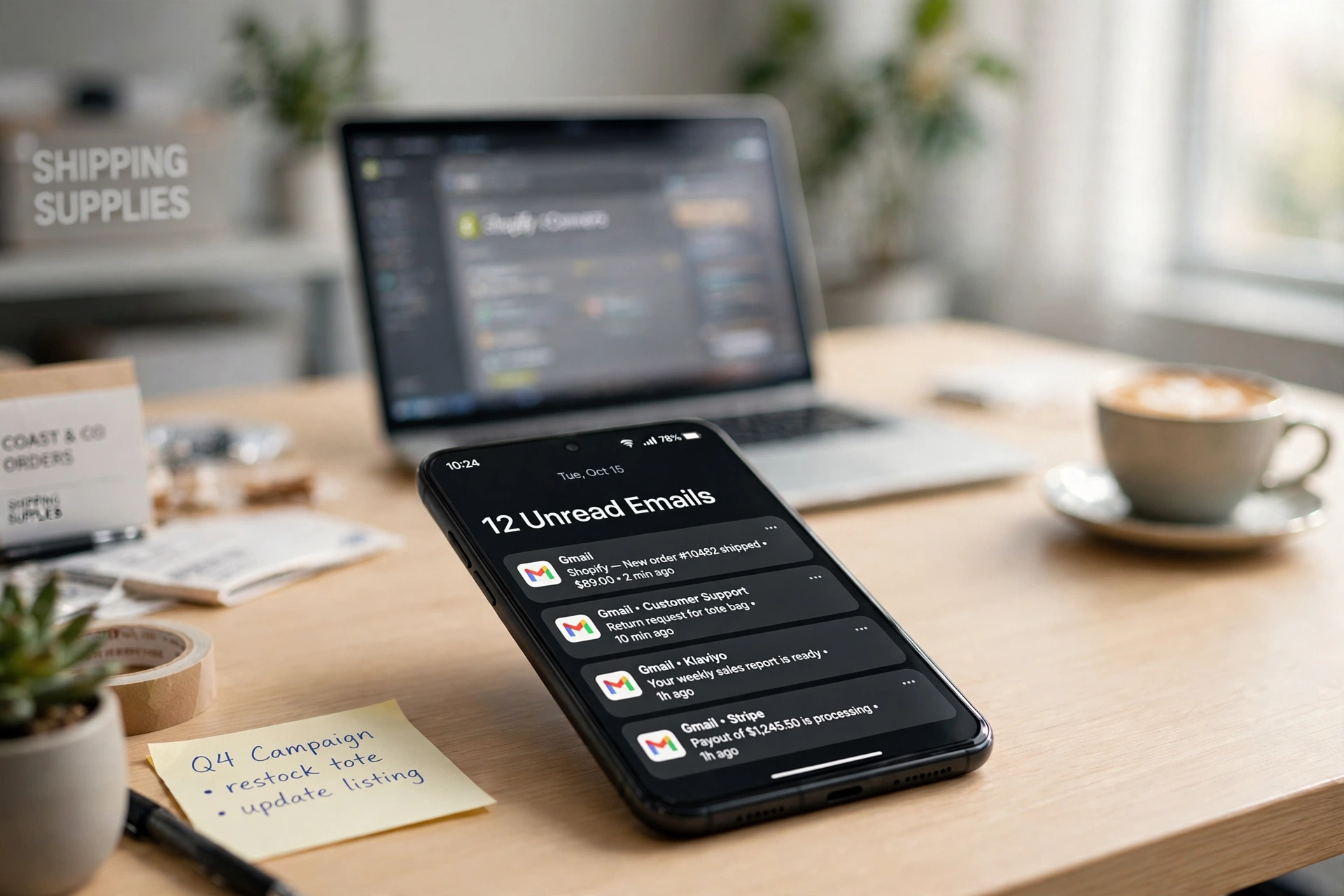
The Problem
Nine reasons owned revenue stays flat. Most stores have six or seven of them, and every one is cheaper to fix than buying the equivalent revenue through ads.
A customer base that looks large and behaves like a stream of strangers. Acquisition keeps refilling a bucket nobody has patched.
A consumable category running at 18–20% repeat when it should sustain double that. The demand exists; nothing is asking for it.
Sessions that reached the cart and left, recovered by a single generic email sent four hours later, if at all.
The order confirmation is the last thing a customer hears until the next promo blast. The highest-intent window in the whole lifecycle, unused.
The same 15% off to the whole list every fortnight. It trains people to wait for discounts and to ignore everything else.
One list, one message. First-time buyers, VIPs and lapsed customers all treated identically, so none of them get anything relevant.
Purchase history, browse behaviour and product affinity sitting in the platform unused, while campaigns are planned on gut feel.
LTV that never grows enough to justify rising acquisition costs, so every CPC increase squeezes the same thin margin.
Revenue that stops the week the ad spend stops. No owned channel doing meaningful work in the background.
What We Do
Ten workstreams. Flows and segmentation come first — campaigns sent into an unsegmented list are the least valuable thing on this page.
Channel role, cadence, offer architecture and how email fits next to paid.
The always-on lifecycle programme that earns revenue without a send button.
Planned promotional calendar, built, sent and reported on every month.
Segments built from purchase, browse and product-affinity data you already hold.
Compliant SMS for the moments that genuinely justify interrupting someone.
Cart, checkout and browse recovery sequences timed to actual drop-off behaviour.
Shipping, education, review request and the second-purchase prompt.
Lapsed-customer automation triggered on your real purchase-cycle data.
VIP tiers, subscription mechanics and rewards where the category supports them.
Subject lines, offers, timing and creative, tested on revenue per recipient.
Retention compounds fastest alongside conversion optimization and paid advertising, or inside a full eCommerce management engagement.
Lifecycle
One journey from first subscribe to win-back. Every stage has a trigger, a message and a metric — nothing runs because a template included it.
01
02
03
04
05
06
07
08
09
10
Sets expectation, delivers the incentive and earns the first purchase.
Triggered on category and product views that did not reach the cart.
Multi-step recovery with escalating incentive only where margin allows.
Separate from cart, because reaching checkout is a much stronger signal.
Shipping updates, product education and setting up the second order.
Driven by affinity and category, not by best-sellers for everyone.
Timed to when the first product has actually been used.
Sent on delivery plus usage window, feeding social proof back to the PDP.
Timed per product from your real repurchase interval data.
Triggered when a customer passes 1.5x their expected repurchase cycle.
Recognition and early access for the cohort carrying your margin.
The Process
Six stages. The last two run continuously once the programme is live.
01
Your existing flows, list health, deliverability, purchase-interval data and where revenue is currently coming from. We quantify the gap before proposing anything.
02
Segments built on purchase history, product affinity, order value and recency — not on an arbitrary engagement window.
03
Lifecycle map, channel split between email and SMS, offer architecture and the cadence each segment should actually receive.
04
Copy, creative and build. Flows go live in priority order so revenue starts before the full programme is finished.
05
Subject lines, timing, offers and creative, measured on revenue per recipient rather than open rate.
06
Monthly reporting on repeat rate, LTV and flow revenue, with the backlog re-prioritised on what moved.
Lifetime Value
Four stages, in order. Skipping to “grow” before “retain” works is how brands end up discounting their best customers.
01
Turn a subscriber or an abandoned session into a first order.
02
Stay relevant between purchases without training people to wait for discounts.
03
Earn the second and third order, where the margin actually lives.
04
Increase order value and reactivate the customers worth reactivating.
By Goal
Seven outcomes and the retention strategy each one needs.
Lifecycle + post-purchase campaigns
Set up the second order in the window right after the first, when intent is highest and cost is zero.
Cart & checkout abandonment
Separate sequences for cart and checkout, timed to real drop-off behaviour rather than a fixed delay.
Segmentation + personalization
Stop sending one message to everyone; relevance is what extends the customer relationship.
Cross-sell & upsell campaigns
Pairing timed to when the first product has been used, measured on incremental revenue.
Win-back automation
Triggered on your actual purchase-cycle data, not a generic 90-day lapse rule.
Loyalty + VIP campaigns
Recognition, early access and tiering for the cohort that already carries your margin.
Owned-channel revenue growth
Shift a share of revenue to a channel with no media cost, so a CPC increase stops being existential.
Platforms
We work in whatever you already have where it is capable. Migration is a recommendation, not a precondition.
Our default for Shopify. Deep flow logic and product-level segmentation.
Campaign and audience management for lighter programmes.
Email and SMS in one workflow, strong on smaller Shopify stores.
Customer, order and subscription data feeding every segment.
WordPress-based stores, with the plugin and hosting realities that come with them.
Where retention needs to reconcile with a wider CRM or B2B pipeline.
SMS at volume, with compliance and consent handled properly.
Sendlane, Drip, Postscript, Yotpo and most mainstream ESPs.
Why Us
Eight things that separate lifecycle retention from sending more newsletters, and worth asking of any eCommerce email marketing agency you shortlist.
Replenishment windows, subscription mechanics and category purchase cycles are our daily work. B2B nurture playbooks do not transfer to a consumables brand.
The programme is built as a journey, not a calendar of sends. Automation carries the revenue; campaigns add to it.
Segments come from purchase interval, product affinity and order value — data you already own and almost certainly are not using.
A first-time buyer, a lapsed customer and a VIP get genuinely different sequences, not the same email with a different name token.
Flows are measured on revenue per recipient. Open rate is a diagnostic; it has never paid an invoice.
Subject lines, offers, timing and creative tested on a running schedule, with results documented either way.
Email, SMS and on-site coordinated so the same customer is not hit three times with the same offer in one afternoon.
Email-attributed revenue reconciled against store revenue, plus repeat rate and LTV by cohort. Including the flows that underperformed.
Proof
Three engagements: challenge, retention strategy, implementation, result. Measured against the twelve months before we started.
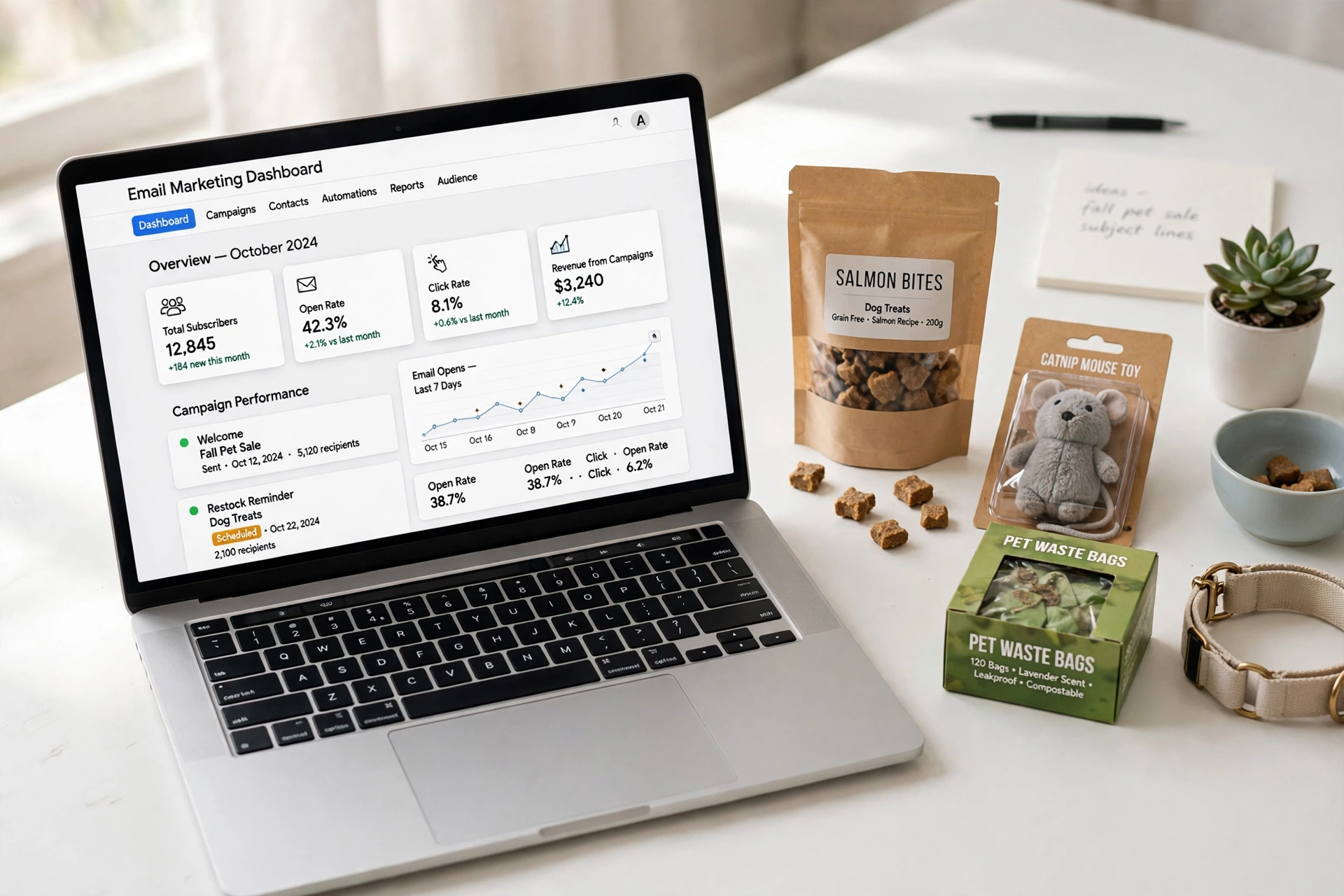
petzz — campaign visual
Pet Supplies · WooCommerce · Klaviyo
Challenge
A 21% repeat purchase rate in a consumables category that should sustain far more, with one generic monthly newsletter and no automation beyond an order confirmation.
Retention strategy
Rebuilt the programme around per-product replenishment timing rather than a single generic flow, segmented by product affinity and order interval, and added win-back triggered on 1.5x expected cycle.
Implementation
Eleven flows built over nine weeks, replenishment timing derived per SKU from two years of order data, and SMS added only for the replenishment and win-back moments.

Nutriblend — campaign visual
Health & Supplements · Shopify Plus · Klaviyo
Challenge
Strong repeat intent with no subscription mechanic: 91% of second orders were placed manually between day 26 and day 38, and the subscribe option converted under 2%.
Retention strategy
Built a post-purchase flow offering subscription conversion at day 21, rebuilt the welcome series around the subscribe-and-save proposition, and added lapse-risk segmentation for subscribers.
Implementation
Post-purchase sequence timed to the observed 26–38 day window, PDP and email messaging aligned on per-unit saving, and a separate subscription-lapse win-back path.
Harvest Table — campaign visual
Food & Beverage · Shopify · Omnisend
Challenge
A subscription box launch with no owned-channel programme, relying entirely on paid social for both acquisition and the retention that a box model depends on.
Retention strategy
Built the full lifecycle from launch: welcome, cart and checkout recovery, onboarding for the first three boxes, pause-and-skip handling, and a referral-led loyalty layer.
Implementation
Cart and checkout treated as separate sequences, first-three-box onboarding to survive the highest-churn window, and a pause flow to catch cancellations before they happened.
Retention outcomes vary heavily by category. A consumable with a 30-day cycle has far more headroom than a once-every-five-years purchase, and we will tell you which one you are on the call.
FAQs
Eight questions that come up before most retention engagements. More on our full FAQ page.
Prefer to read before you talk to anyone? Our Customer Retention & Email Marketing Guide is the eight-chapter version of how we think about this work, published in full.
Get a free retention audit. We will review your flows, list health and repurchase data, and tell you what the missing automation is worth annually — whether or not you hire us.