High traffic, low conversion
Acquisition is working and the store is not. Every additional visitor costs more and earns the same, so growth gets progressively more expensive.

Scale. Optimize. Succeed.
Conversion Rate Optimization
Structured eCommerce CRO across product pages, category pages, cart and checkout. Research first, prioritised testing second, and a documented hypothesis behind every change we ship.
The Problem
Nine reasons stores leak revenue. Most audits find five or six at once — and fixing the cheapest two usually pays for the whole engagement, which is the case for hiring an eCommerce CRO agency rather than buying another testing tool.
Acquisition is working and the store is not. Every additional visitor costs more and earns the same, so growth gets progressively more expensive.
Manufacturer copy, three images, no sizing guidance and no answer to the objection that actually stops the purchase.
Filters that return nothing, categories that overlap, and no obvious path from landing page to the product someone came for.
Buttons that blend into the theme, sit below the fold on mobile, or compete with four other calls to action on the same screen.
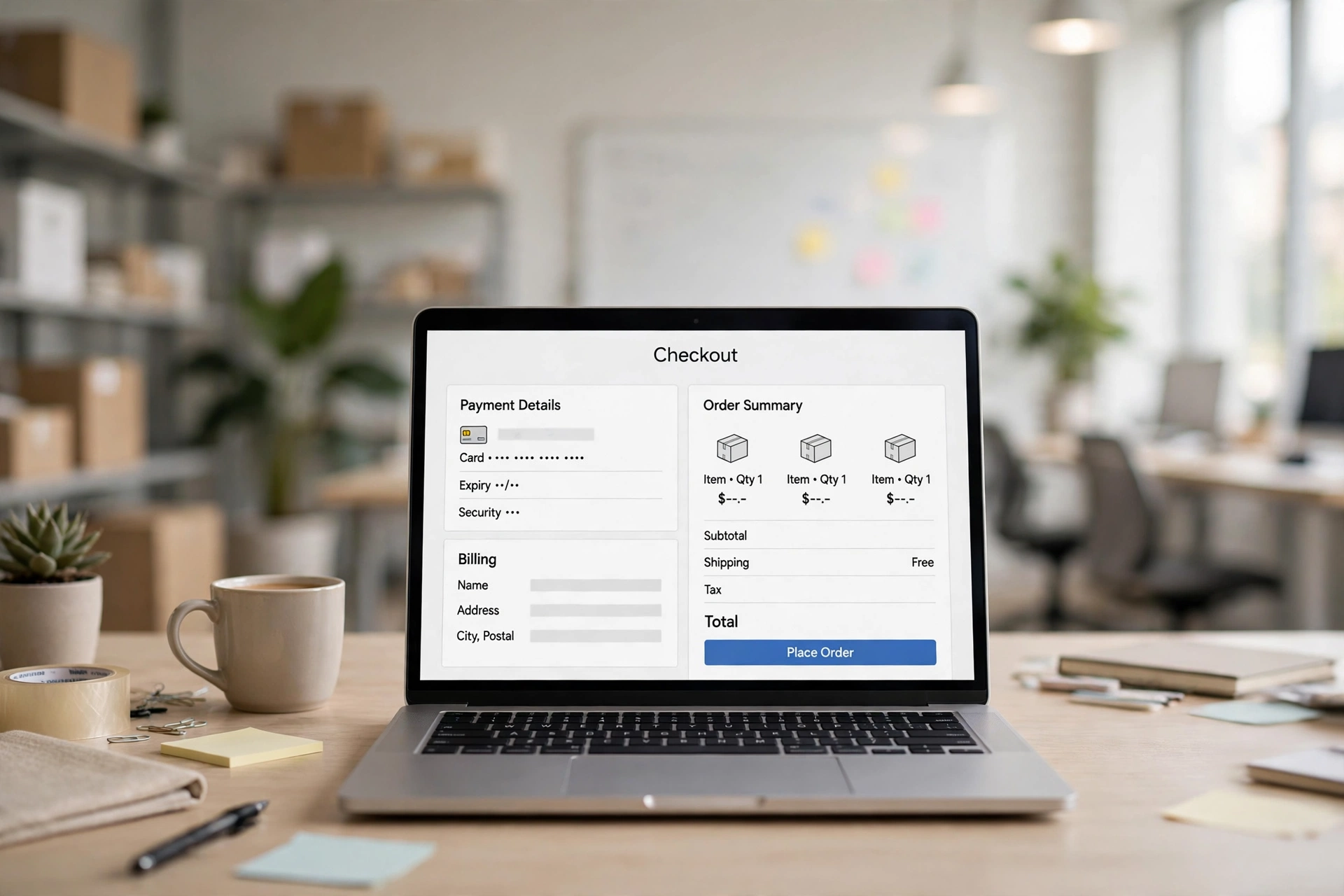
Shipping cost revealed at the last step, forced account creation, or a payment method the customer expected and did not find.
Most of the traffic, a fraction of the revenue. Tap targets too small, images too heavy, and a checkout designed on a desktop monitor.
No reviews near the buy button, no returns policy in view, no delivery estimate. First-time buyers need reasons to believe you.
Four seconds to first paint, unclear next steps, and a cart that loses state between devices.
Changes shipped on opinion and never measured, so nobody knows which of last year’s twelve redesign decisions helped.
What We Do
Ten workstreams. The audit decides which two or three are worth starting with — running all ten at once means none of them can be measured. Engaging an eCommerce conversion rate optimization agency should narrow the work, not widen it.
Quantitative and qualitative review of where revenue is actually leaking.
Navigation, filtering, search and the paths people actually take.
Imagery, copy, specification depth, social proof and buy-box layout.
Merchandising order, filter design and above-the-fold clarity.
Campaign landing pages built to match the ad that earned the click.
Friction, field count, payment methods and cost transparency.
Mobile-first rebuilds of the pages carrying the most traffic.
Hypothesis, sample size, significance and a documented result either way.
Reviews, guarantees, delivery estimates and returns clarity where they matter.
The whole path from landing to purchase, not one page in isolation.
CRO compounds fastest next to paid advertising and eCommerce SEO , or inside a full eCommerce management engagement.
Research
Four inputs. Testing without all four is guessing with extra steps. Where the finding is that the template itself is wrong rather than one element on it, the work moves to design .
The Process
Six stages, then it loops. Each cycle typically runs four to six weeks depending on traffic volume.
01
Analytics, session recordings, heatmaps, on-site search and customer feedback. We want to know what people are trying to do and where it breaks, before anyone has an opinion about button colour.
02
A structured walk-through of every step from landing to purchase, on mobile first. Every friction point logged with the evidence behind it.
03
Findings turned into testable hypotheses: what we think is happening, what we would change, and what metric should move if we are right.
04
Scored on expected impact, traffic volume on the affected page and implementation effort. High-traffic, high-friction, low-effort goes first.
05
A/B tests where traffic supports significance, and evidence-led direct implementation where it does not. Both are documented the same way.
06
Result recorded either way, winners rolled out and monitored for decay, losers written up so nobody retries them in eighteen months.
The Journey
Homepage → category → product → cart → checkout → purchase. eCommerce conversion optimization on one step in isolation just moves the drop-off somewhere else.
01
Clarity of proposition, entry paths into category, and whether returning visitors can resume where they left off.
02
Merchandising order, filter usability, above-the-fold product density and how quickly someone can narrow to a shortlist.
03
Imagery, specification depth, objection handling, reviews near the buy box, delivery and returns clarity.
04
Shipping cost transparency, cross-sell relevance, edit friction and whether the cart survives a device switch.
05
Field count, guest checkout, payment method coverage, error handling and progress clarity.
06
Confirmation clarity, post-purchase upsell and the first touch of the retention programme.
By Goal
Seven outcomes and the approach each one needs. Average order value, repeat rate and basket size all pull in different directions, and conversion rate optimization for luxury eCommerce in particular trades raw conversion for considered purchase — a premium brand that doubles its conversion rate has usually damaged something more valuable.
Fix the friction the research surfaced, then test the changes that need proving rather than assuming.
Work the whole path rather than one page, so gains compound instead of relocating the drop-off.
Cost transparency earlier, fewer fields, guest checkout and the payment methods your buyers expect.
Imagery, specification depth, objection handling and social proof positioned where the decision is made.
Relevant pairing at the right moment, tested for incremental revenue rather than attach rate alone.
Mobile-first rebuilds of the highest-traffic templates, where the gap between traffic and revenue is widest.
The cheapest growth available — no additional media spend, just a higher return on what you already buy.
Why Us
Eight things that separate eCommerce CRO from generic conversion advice.
Every test starts from something observed — a recording, a drop-off, a search query — not from a best-practice list or somebody’s preference.
Variant selection, filtering, shipping thresholds and returns anxiety are our daily problems. Lead-gen CRO advice does not transfer to a 2,000-SKU catalog.
We optimise for the buyer completing the task they came to do. Dark patterns lift this quarter and cost you the repeat purchase.
Scored on impact, traffic and effort. We do not run a low-traffic homepage test for six weeks when the product template is losing more revenue daily.
Landing through checkout, because a product-page win that dies in a broken cart is not a win at all.
A running backlog rather than a one-off project. Compounding small wins beats an annual redesign nobody can measure.
We report revenue per visitor alongside conversion rate, because a rate lift that cuts average order value is not progress.
The same team fixes the landing page your ads point at and the template your category rankings depend on — no cross-vendor backlog.
Proof
Three engagements, measured against the twelve months before we started.

Home & Kitchen · Shopify
Healthy organic and paid traffic converting at 1.4%, with a 4.1 second mobile LCP and category pages showing four products above the fold on a phone.
Rebuilt category templates mobile-first, shipped a Core Web Vitals pass, moved reviews and delivery estimates above the buy button, and tested filter design across three iterations.

Fashion & Apparel · Shopify Plus
A 41% return rate driven by sizing uncertainty, with a size guide hidden behind a modal nobody opened and no fit feedback anywhere on the product page.
Inline size guidance with model measurements, fit feedback pulled from review data, and a post-purchase survey feeding the next iteration. Checkout reduced from five steps to three.

Home & Furniture · Shopify Plus
High-consideration furniture purchases with 71% of sessions on mobile and only 22% of revenue, plus a configurator that was effectively unusable below 768px.
Rebuilt the configurator as a mobile-native flow, added finance messaging and delivery estimates to the buy box, and restructured checkout around saved carts and callback requests.
Conversion outcomes vary considerably by category, price point and starting position. A store already converting at 4% has less headroom than one at 1.2%, and we will say so on the call.
FAQs
Eight questions that come up before most CRO engagements. More on our full FAQ page .
Prefer to read before you talk to anyone? Our eCommerce Conversion Rate Optimization Guide is the eight-chapter version of how we think about this work, published in full.
Get a free CRO audit. We will walk your funnel mobile-first, review your behaviour data and come back with the three highest-value fixes — whether or not you hire us.