
Discipline 01
Store & UX
The storefront experience end to end, on the devices your traffic actually uses.
- Navigation, search and category structure
- Product page standard on your top 20 SKUs
- Cart and checkout friction, measured on mobile

Scale. Optimize. Succeed.
Free eCommerce audit
A week of senior attention across store experience, SEO, paid media, conversion, retention and marketplaces. You get a ranked list of what to fix first, the evidence behind each finding, and the order to do it in — and you keep it whether or not we ever work together.

audit points
typical turnaround
cost or obligation
The symptom
Most stores do not stall because the strategy was wrong. They stall because nobody owns the operating work end to end, and the compounding tasks keep losing to the urgent ones. An eCommerce store audit is the cheapest way to find out which of those is true for you.
The audit is a diagnosis. It is deliberately not a proposal.
If more than two of these are true, the constraint on your business is probably not the thing you were about to spend money on.
An audit exists to turn that list into one sentence: this is the constraint, and this is what removing it is worth.

What we audit
Each area is reviewed by the specialist who runs it day to day — the eCommerce SEO site audit by the person who owns organic search, the ad account by the person who spends in it — then the findings are ranked against each other rather than reported in six separate silos. That ranking is what makes an eCommerce website audit useful rather than merely long.
The storefront experience end to end, on the devices your traffic actually uses.
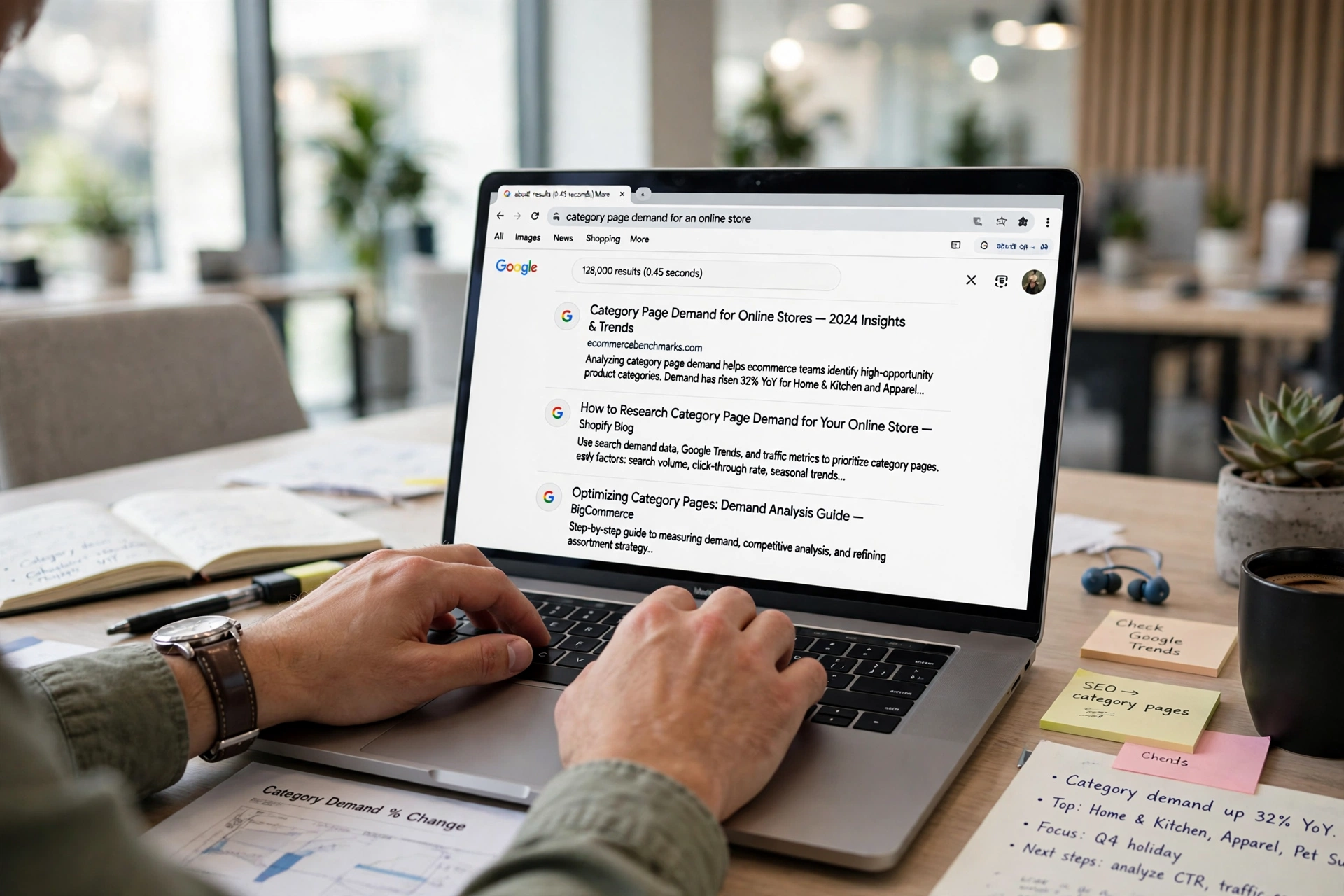
Whether your category layer is capturing the demand your catalogue can serve. The eCommerce SEO audit covers demand mapping, category architecture, indexation and the technical faults that cap organic revenue.

Account structure, feed quality and whether spend is priced against margin.
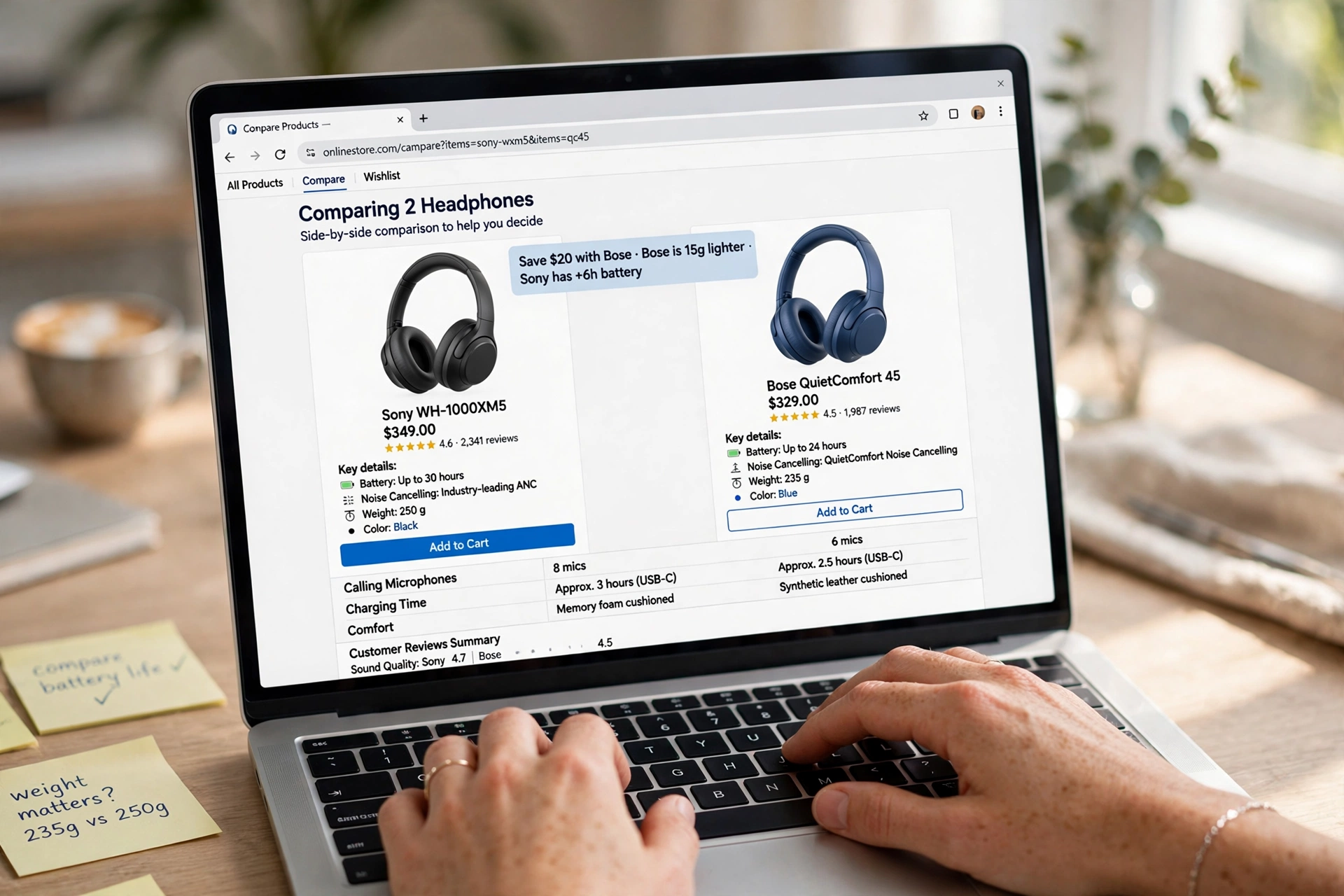
Where the funnel loses people, and which losses are worth the engineering.

Lifecycle coverage, and whether reported recovery survives a holdout.

Account health, catalogue ownership, and the platform work underneath both.
Not every discipline applies to every store. If you do not sell on marketplaces we say so and spend the time elsewhere — the framework we work from is published in full.
What you receive
A written document you keep, not a slide deck we present and take away with us.
Three to five findings ranked by revenue impact against effort, each with the evidence that identified it and the metric that will move if it is fixed.
Every point either cleared or flagged, with the threshold stated, so you can see what passed as well as what did not.
What to do in what order, sized in weeks, with the owner named — including the work you should do in-house rather than buy.
A live session with the specialists who did the review, recorded so the people who could not attend still get it.
How it works
Five steps, about a week from the day access is granted. Most of the elapsed time is us reading, not you filling anything in.
We establish what you think the problem is, what you have already tried, and which disciplines are actually in scope. If the audit is not the right thing for you, this is where we say so.
Read-only access to analytics, ad accounts, the store admin and marketplace seller accounts. We send a single checklist; you do not have to prepare anything else.
Each specialist works through their discipline against the twelve points. Findings are written as they are made, with the evidence attached.
The whole team argues the findings against each other and ranks them. This is the part that turns six reports into one answer.
A 45-minute session with the people who did the work. You keep the document and the recording regardless of what happens next.
No payment, no contract and no commitment at any point in this sequence.
Fit
The audit is most useful when there is enough data to read and a real decision waiting on the answer.
Enough volume for the data to mean something, and enough at stake that ranking the work properly is worth a week.
You are about to commit to a salary or a retainer and want the constraint named before you commit to either.
A new head of eCommerce, a new owner, or a team taking work back in-house after an agency relationship ended.
NOT WRITTEN FOR
Pre-launch stores with no data to read, and businesses whose unit economics do not work. If contribution margin after returns, carriage and fees is negative, no audit fixes that — pricing, product mix or cost base has to change first, and we will tell you so on the scoping call rather than after a week of work.
Why us
Four things that are unusual, and one of them costs us work.
The twelve points we work through are on this site in full, with the thresholds. You can run the short version yourself before deciding whether to ask us.
Not by a sales engineer and not by a template. The specialist who reviews your paid media is the person who would run it.
A scored audit lets everyone feel moderately good about a store that is failing badly on one thing. We rank instead, and we defend the ranking.
If the answer is that you should hire in-house rather than appoint us, that is in the document. It costs us engagements and it is the reason people send us their friends.
Questions
What it costs, what we need, and what happens afterwards.
Start here
Ten questions, about three minutes. A senior strategist replies within one business day with either a scoping call or an honest reason the audit is not right for you.
WHAT HAPPENS NEXT
Within one business day a senior strategist replies — not an SDR, and not an automated sequence.
A 30-minute scoping call establishes what is in scope. If the audit is not right for you, we say so here.
Read-only access is granted through each platform’s own permissions. We never ask for a password.
About a week later you get the document, the ranked list and a recorded walkthrough.
PREFER TO TALK FIRST?
If you would rather ask questions before requesting anything, the contact page has our direct details and the same form without the audit framing.
Or read the twelve-point framework first and run the short version yourself.
Run the twelve points yourself. The framework is published in full, with every threshold, and you are welcome to come back only when you have a constraint to name.