Slow or outdated stores
Apps stacked on apps and a theme three major versions behind. Every added feature makes the next one slower.

Scale. Optimize. Succeed.
Development & Technology
Shopify, WooCommerce and custom builds designed around conversion and speed, integrated with the systems that actually run your business. Built by people who then have to market the store they shipped.

The Problem
Twelve things that turn a store into a constraint. The audit usually finds the real bottleneck is one or two of them, and the rest are symptoms.
Apps stacked on apps and a theme three major versions behind. Every added feature makes the next one slower.
Most of the traffic, a fraction of the revenue, on a layout that was designed and signed off on a desktop monitor.
The business needs something the platform does not do natively, and the available app does 60% of it badly.
An ERP, a 3PL and a POS that each expect a different data shape, joined by a spreadsheet somebody exports weekly.
Stock in one system, orders in another, customers in a third. No single source of truth, so every report disagrees.
Extra steps, missing payment methods and a shipping calculator that reveals cost at the worst possible moment.
A build that works at 500 orders a month and falls over at 5,000, because nothing was designed for the second number.
Faceted URLs generating index bloat, broken canonicals and JavaScript rendering that hides content from crawlers.
Releases that break something else each time, because there is no staging environment and no regression testing.
Nobody left who understands the custom code, so every small change becomes a quote and a two-week wait.
A stack chosen five years ago for reasons nobody documented, now expensive to host and impossible to hire for.
A genuine ceiling on what the current platform can do, reached long before anybody admitted it was the constraint.
What We Do
Eight services covering build, migration, integration and maintenance. Each will get its own detail page as we publish them. Scope the eCommerce development services you need from the audit, not from a package list.
01
Custom, conversion-focused online stores built around how your customers actually buy. Hiring an eCommerce website developer by the hour gets you a build; this gets you a build the same team then has to market. Where the brief is the experience rather than the engineering, that is eCommerce web design .
02
Store builds, theme customization, apps and Shopify Plus functionality including Flow and Markets.
03
Flexible WordPress-based eCommerce, with the hosting and plugin discipline it needs to stay fast.
04
Bespoke functionality where the platform and its app ecosystem genuinely cannot deliver it, including private platform apps and mobile apps .
05
Modernization and platform migrations with rankings, redirects and data integrity planned first.
06
Connecting the storefront to ERP, CRM, 3PL, POS and the rest of the systems that run the business.
07
Core Web Vitals, front-end weight, app audit and the stability work that keeps it fast.
08
Ongoing development, updates, monitoring and the troubleshooting that stops small issues compounding.
Development sits underneath everything else — it is what makes SEO , CRO and retention possible, and it is included in a full eCommerce management engagement. Mobile and progressive web apps are scoped separately under eCommerce app development .
Stack
We recommend the platform that fits the business, not the one we would rather build on.
Scope
Ten things we ship regularly. If what you need is not on the list, it is worth a conversation rather than an assumption — most eCommerce website development work turns out to be two of these ten, not all of them. The question of how to build an eCommerce website is almost always really a question about which two.
Ecosystem
The storefront sits at the centre. Everything below connects to it, and every connection is a place where data can silently stop matching.
Connected to the nine systems below
Gateways, wallets, BNPL and multi-currency settlement.
Stock sync across storefront, marketplaces and warehouse.
Customer records, service history and segmentation.
Orders, invoicing, purchasing and financial reconciliation.
Klaviyo, Omnisend and Attentive with full event data.
GA4, server-side tracking and reporting warehouses.
3PL, carrier rates, labels and tracking back to the customer.
Amazon, Walmart, eBay and Etsy listing and order sync.
Helpdesk, live chat and returns portals with order context.
The Process
Seven stages. The last one is not an afterthought — it is where most of the value of a good build is either kept or lost.
01
Business requirements, current technology and the systems already in place. What the store has to do, what it must not break, and who depends on it internally.
02
Architecture, functionality scope and a project roadmap with sequencing. Approved before any code is written, so scope changes are decisions rather than surprises.
03
UX and UI for a conversion-focused storefront — templates, states and edge cases, designed mobile-first because that is where the traffic is.
04
Storefront, features and integrations built on a staging environment, in reviewable increments rather than one reveal at the end.
05
Performance, device coverage, checkout, functionality and QA. Including the failure paths — declined payments, out-of-stock races, integration timeouts.
06
Deployment, data migration and redirect mapping, with a rollback plan and someone watching for the first 48 hours.
07
Maintenance, monitoring and continuous technical improvement, so the build keeps working as the business changes shape.
By Need
Eight needs and the solution each one calls for.
A build scoped around your catalog, margin and fulfilment reality rather than a template demo. If you have been looking for an eCommerce web developer and finding freelancers who will build what you specify, the difference here is that we will argue with the specification first. Most brands at this stage are weighing one eCommerce developer against an agency, and the honest distinction is not skill but accountability after launch — eCommerce web developers hand over a build, while the team that has to market the store afterwards has to live with it.
Incremental rebuilds of the templates carrying revenue, measured rather than replaced wholesale.
Full URL inventory, redirect map and staged crawl-and-fix so the traffic survives the move.
App audit, front-end weight, image pipeline and Core Web Vitals against a measured baseline.
Built natively where the platform allows it, so it survives the next platform update.
ERP, CRM, 3PL and POS joined properly, with error handling for when one of them is down.
Designed for the order volume and catalog size you are heading toward, not the current one.
Monitoring, updates and a named developer who already knows your codebase.
Foundations
Four non-negotiables. They are cheap to build in and expensive to add later, which is why they are in scope by default on every eCommerce web development project we take.
Why Us
Eight things that separate an eCommerce build from a general web project, and what to ask any eCommerce development company before the statement of work is signed.
Variant logic, faceted navigation, feed generation and checkout constraints are our daily work, not something we look up when a ticket mentions them.
We build the store we then have to grow. That changes what gets prioritised — nobody here ships a beautiful build that cannot be marketed.
Design and engineering in the same conversation, so the interface that tests well is also the one that can actually be built and maintained.
A performance budget set before development starts and enforced at review, rather than a speed audit two months after launch.
Built for the catalog and order volume you are heading toward. Rebuilding at 5,000 orders a month because it was scoped for 500 is an avoidable cost.
ERP, CRM, 3PL, POS and marketplace connections, including the error handling for the days one of them is unavailable.
URL structure, crawlability, schema and conversion patterns are decided during the build, by the team that owns those metrics afterwards.
A named developer who already knows your codebase, rather than a support queue that starts from scratch each time.
Proof
Three builds: requirement, technology, what we built and the business outcome.


Client / Project
Magento to Shopify Plus replatform
Requirement
A 2,400-SKU furniture catalog on Adobe Commerce with rising hosting costs, an eighteen-month development backlog and a configurator unusable below 768px.
Technology
Shopify Plus, custom configurator app, Next.js content layer, ERP and 3PL integration
What we built
Full migration with a mapped redirect for every ranking URL, the product configurator rebuilt as a mobile-native flow, and finance messaging plus delivery estimates added to the buy box.
Business outcome


Client / Project
Performance rebuild & template overhaul
Requirement
A Shopify theme carrying fourteen apps, a 4.1 second mobile LCP and category templates showing four products above the fold on a phone.
Technology
Shopify, custom theme fork, image pipeline rework, app consolidation
What we built
App audit removing six redundant apps, category and product templates rebuilt mobile-first, image delivery reworked, and render-blocking scripts deferred or eliminated.
Business outcome
Client / Project
B2B portal & net-terms checkout
Requirement
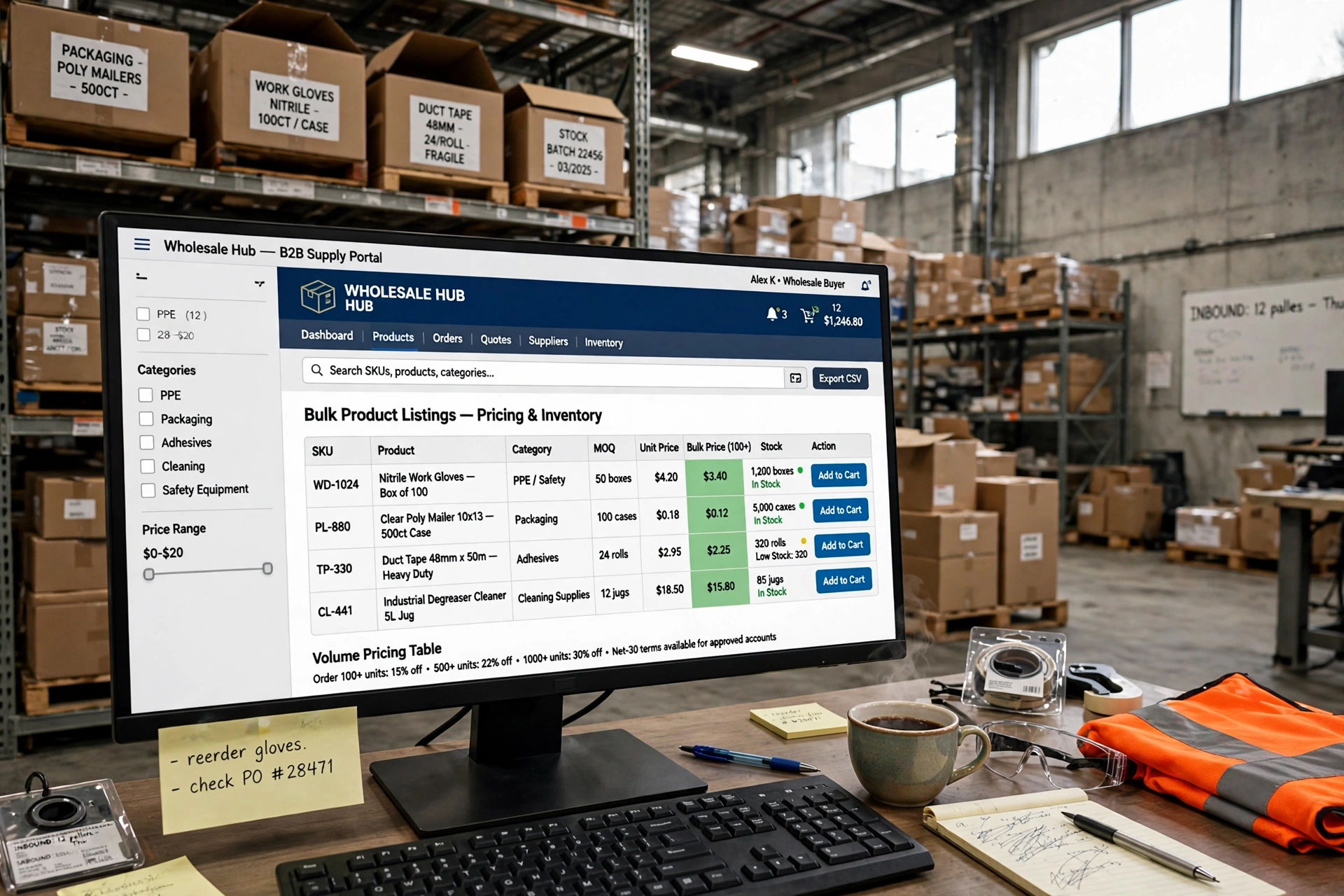
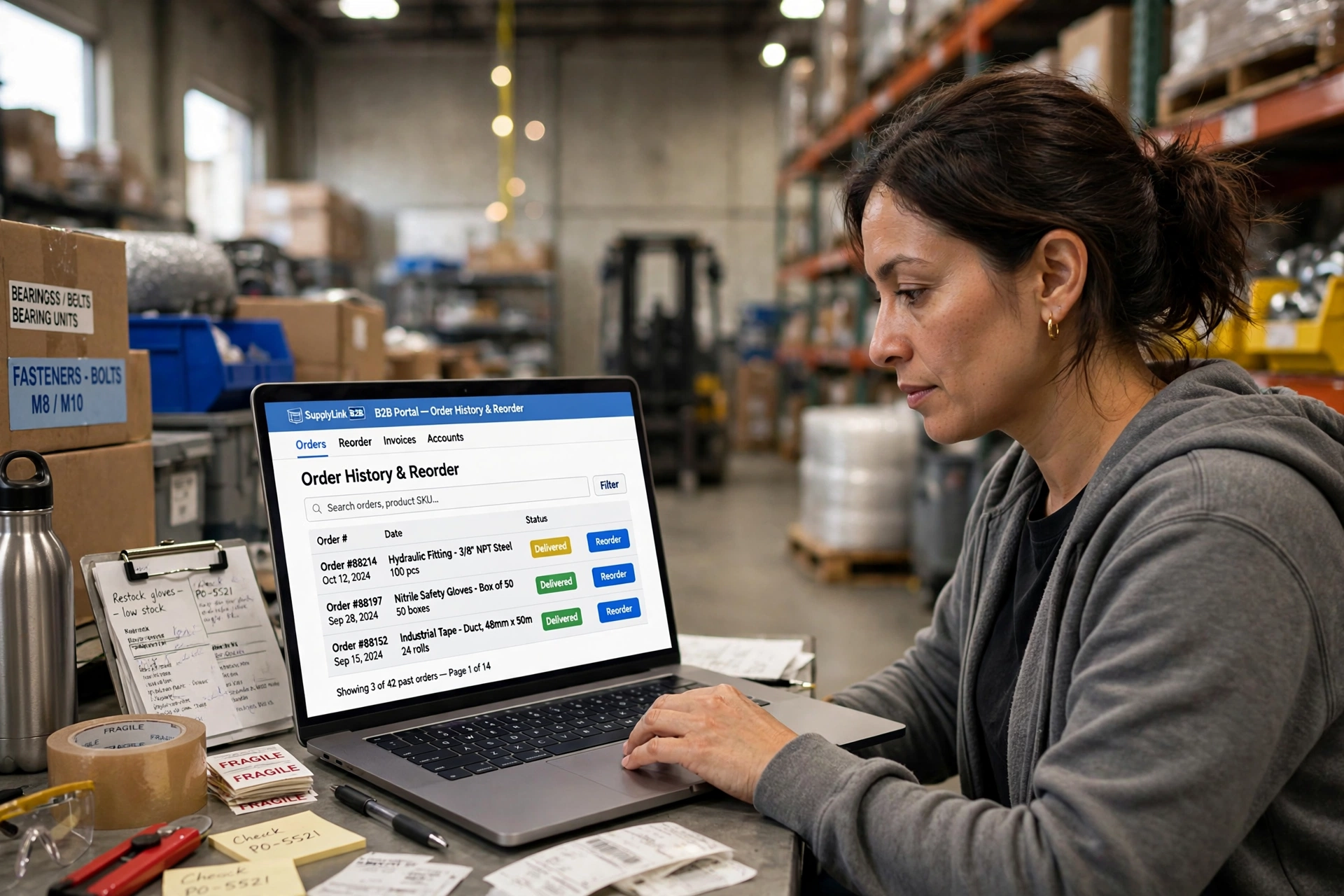
A B2B distributor taking trade orders by email and phone, with customer-specific pricing held in an ERP that the storefront could not see.
Technology
BigCommerce, custom B2B portal, ERP integration, net-terms checkout
What we built
A customer account area exposing contract pricing from the ERP in real time, quote-to-order workflow, net-terms checkout with credit limit checks, and reorder from order history.
Business outcome
FAQs
Eight questions that come up before most builds. More on our full FAQ page .
Book a technical audit. We will review your build, performance, integrations and technical SEO, and tell you what is worth fixing and what is worth replacing — whether or not you hire us.